What to expect when you visit Saint Paul's Church


You'll be welcome

We extend a cordial welcome to you to worship with us, and offer this document as a brief introduction to the Church.

The Place of Worship

As you enter, you will notice an atmosphere of worship and reverence. In the Church, we ask that there be silence before the service begins. During this time, many people choose to kneel and pray.

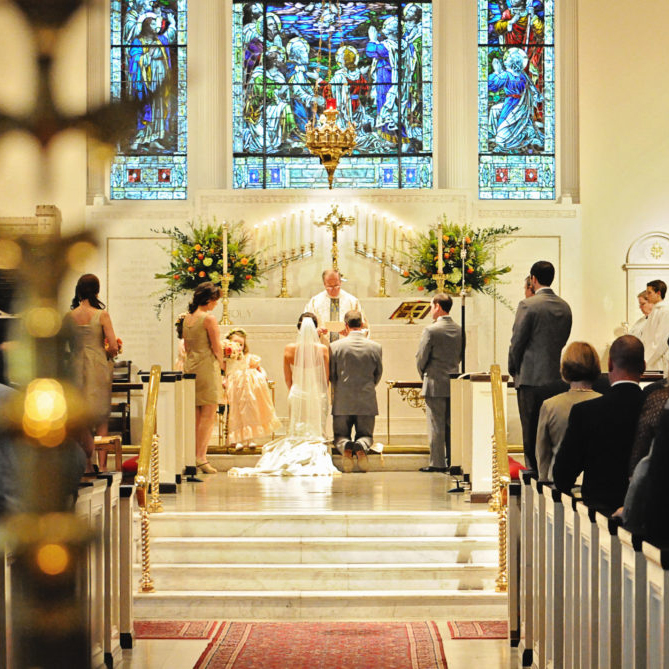
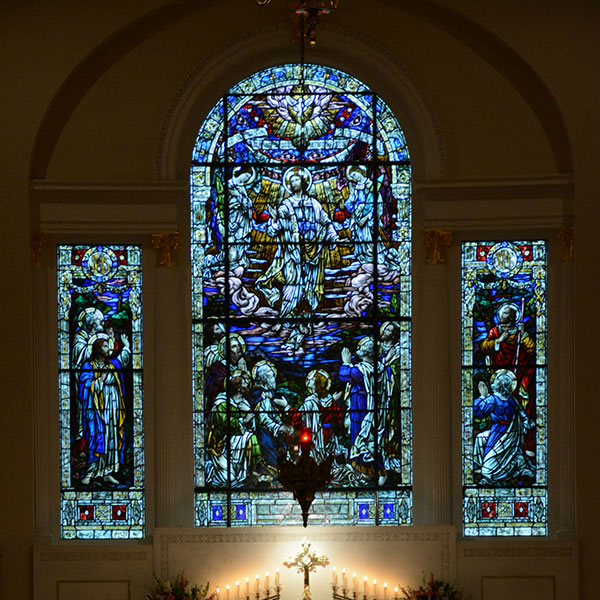
Episcopal churches are built in many architectural styles; but whether the church be small or large, elaborate or plain, your eye is carried to the altar, or holy table, and to the cross. So our thoughts are taken at once to Christ and to God whose house the church is.

On and behind the altar there are candles to remind us that Christ is the "Light of the world".(John 8:12). Special candles are lit during Advent, Christmastide, and Eastertide. Often there are flowers, to beautify God's house and to recall the resurrection of Jesus.

On the left side at the front of the church is a lectern from which the Scriptures are read. The pulpit, for the proclamation of the Word, is on the right side. From here, the sermon is preached.

The Act of Worship

Episcopal church services are congregational. In the pews you will find The Book of Common Prayer, the use of which enables the congregation to share fully in every service. The large print is the actual service. The smaller print gives directions to ministers and people for conduct of the service.

You may wonder when to stand or kneel. Practices vary-even among individual Episcopalians.

The general rule is to stand to sing hymns (found in The Hymnal in the pews) and other songs (many of them from The Holy Bible) called canticles or chants and printed as part of the service. We stand, too, to say our affirmation of faith, the Creed; and for the reading of the Gospel in the Holy Eucharist. At Saint Paul's, the Psalms are sung or said while sitting. We sit during readings from the Old Testament or New Testament Letters, the sermon, and the choir anthems. We kneel or stand for prayer to show our gratefulness to God for accepting us as children or as an act of humility before God.

The Regular Services

The principal service is the Holy Eucharist (Holy Communion). At the early service, it is celebrated quite simply, without music. At the other services on Sundays, or on other great Christian days such as Christmas, music is customary.

Another service is Morning Prayer. The parallel evening service is Evening Prayer. These services consist of psalms, Bible readings, and prayers; and may include a sermon. They may be with or without music. From time to time, the Saint Paul's Choir sings Evensong (sung Evening Prayer) in the manner of the great English cathedrals.

While some parts of the services are always the same, other parts change. At the Holy Eucharist, for example, two or three Bible selections are read. These change each Sunday. So do the psalms. Certain of the prayers also change, in order to provide variety. Page numbers for parts of the service printed elsewhere in the Book are usually announced or given in the service leaflet. But do not be embarrassed to ask your neighbor for the page number or other assistance.

You will find the services of the Episcopal Church beautiful in their ordered dignity, God-centered, and yet mindful of the nature and needs of human beings.

Before and After Services

It is the custom upon entering church to kneel in one's pew for a prayer of personal preparation for worship. Episcopalians use the time before a service for personal meditation and devotions. This is not an appropriate place for conversations.

Many parishioners bow to the altar (or genuflect) on entering and leaving the church as an act of reverence for Christ.

At the end of the service some persons kneel for a private prayer before leaving. Others sometimes sit to listen to the organ postlude.

Vestments

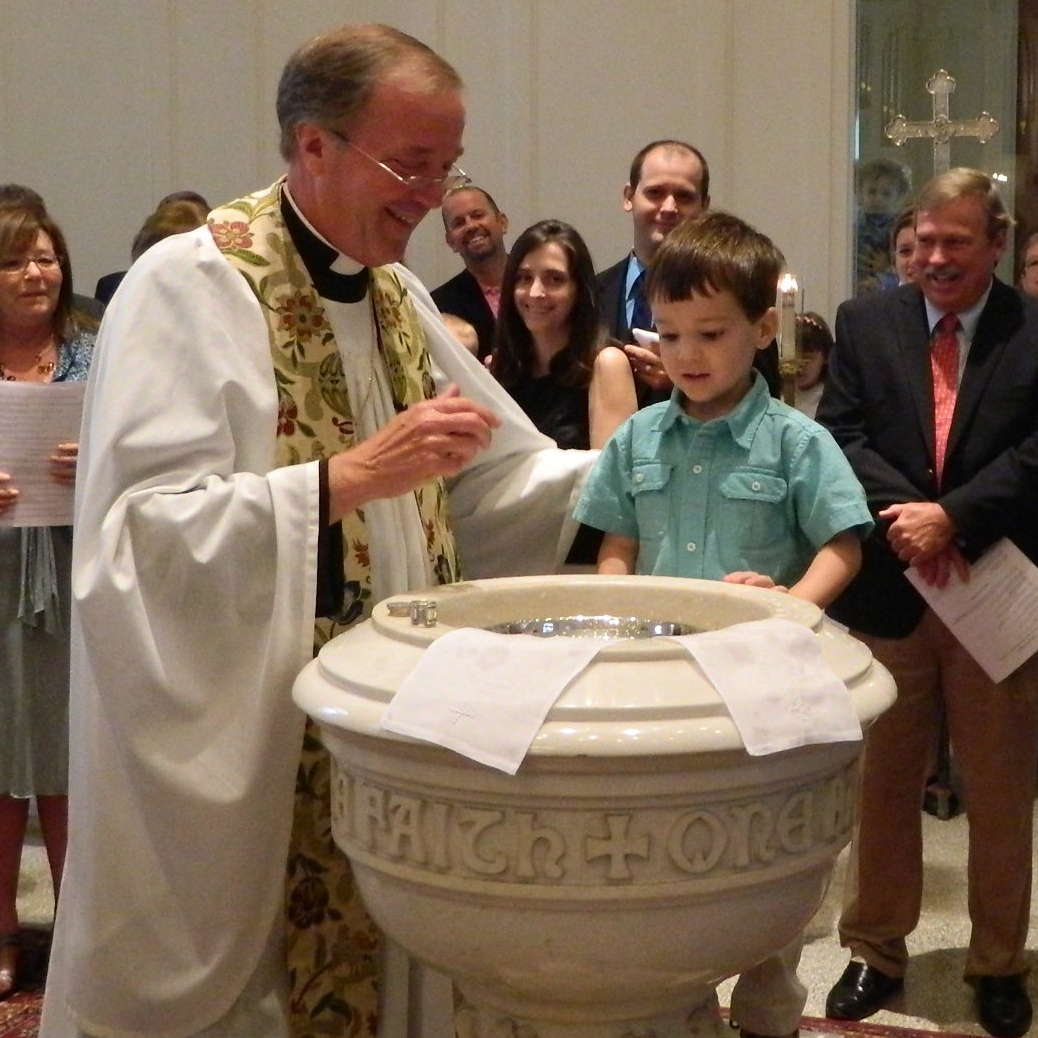
To add to the beauty and festivity of the services, and to signify their special ministries, the clergy and other ministers wear vestments. Choir vestments usually consist of an undergown called a cassock (red at Saint Paul's) and a white, gathered overgown called a surplice. The clergy also wear cassock and surplice at Morning or Evening Prayer.

Another familiar vestment is the alb, a white tunic with sleeves that covers the body from neck to ankles. Over it (or over the surplice) ordained ministers wear a stole, a narrow band of colored fabric. Deacons wear the stole over one shoulder, priests and bishops over both shoulders.

At the Holy Eucharist a bishop or priest frequently wears a chasuble (a circular garment that envelopes the body) over the alb and stole. The deacon's corresponding vestment has sleeves and is called a dalmatic. At his visits to the parish, the Bishop wears a special headcovering called a mitre.

Stoles, chasubles, and dalmatics, as well as altar coverings, are usually made of rich fabrics. Their color changes with the seasons and holy days of the Church Year. The most frequently used colors are white, red, violet, blue and green.

The Church Year

The Episcopal Church observes the traditional Christian calendar. The season of Advent, during which we prepare for Christmas, begins on the Sunday closest to November 30. Christmas itself lasts twelve days, after which we celebrate the feast of the Epiphany (January 6).

Lent, the forty days of preparation for Easter, begins on Ash Wednesday. Easter season lasts fifty days, concluding on the feast of Pentecost.

During these times the Bible readings are chosen for their appropriateness to the season. During the rest of the year-the season after Epiphany and the long season after Pentecost (except for a few special Sundays)---the New Testament is read sequentially from Sunday to Sunday. The Old Testament lesson corresponds in theme with one of the New Testament readings.

Coming and Going

Ushers will greet you, and will escort you to a pew if you desire. They will answer your questions about the service. Pews are unreserved at Saint Paul's Church.

Following the service the clergy and others serving greet the people as they leave.

You Will Not Be Embarrassed

When you visit an Episcopal church, you will be our respected and welcome guest. You will not be singled out in an embarrassing way, nor asked to stand before the congregation nor to come forward. You will worship God with us.

Should you wish to know more about the Episcopal Church or how one becomes an Episcopalian, the pastor will gladly answer your questions and suggest the way to membership.


Adapted from materials produced by the Office of Communication
The Episcopal Church Center

Episcopal Church and Worship Links


Episcopal Glossary


Worship Services

Sunday
7:45 - Rite I
9:00 - Rite II
11:00 - Rite II

Wednesday
Noon - Rite II in Chapel


©2009 Saint Paul's Church | All rights reserved - 605 Reynolds Street, Augusta, Georgia 30901-1431 - (706) 724-2485